Overview
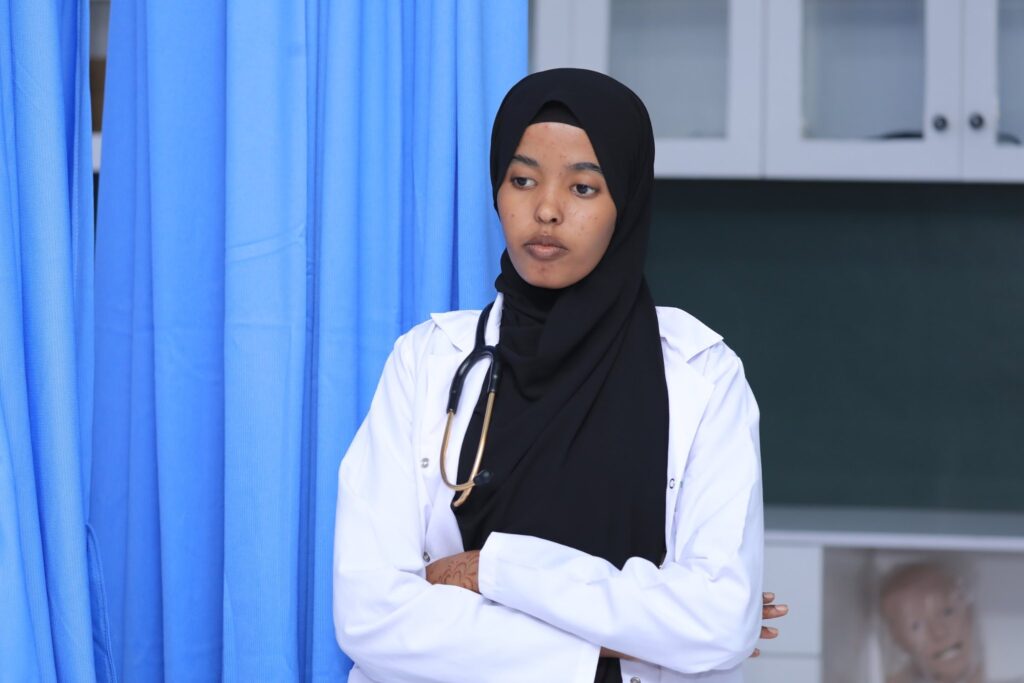
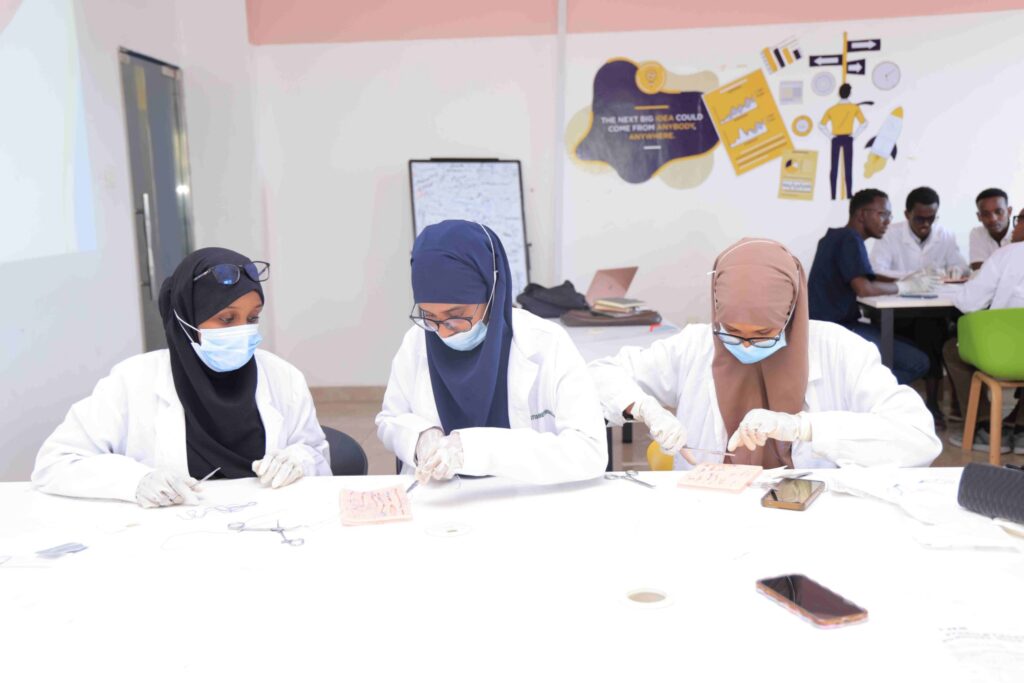
The Bachelor of Midwifery prepares midwives to give safe, respectful, woman- and family-centred care across the whole continuum of maternity: before pregnancy, in pregnancy, labour and birth, after birth, and for the newborn. Two years of foundation and basic midwifery sciences, practised first in the skills laboratory, are followed by three years of advanced training in which theory is integrated with supervised practice at Dr. Sumait Hospital, Madina Hospital, Banaadir Hospital and SOS Hospital. Students learn to manage normal birth, recognise and respond to obstetric emergencies, care for premature babies, and counsel women on family planning. The final year is a two-semester supervised internship, and the programme provides 5,730 contact hours.
Programme structure
5 years (10 semesters), full time, including a two-semester supervised clinical internship in Year 5.
- Years 1–2Foundation and basic midwifery sciences
- Years 3–4Supervised practice at four hospitals
- Year 5Two-semester internship
What you will learn
By graduation, you will be able to:
Assess and interpret health information to plan maternal and newborn care
Perform midwifery procedures safely, including managing normal labour and birth
Recognise obstetric and newborn emergencies and begin appropriate care
Provide community-oriented maternal care with sensitivity to culture and religion
Counsel women and families on pregnancy, childbirth, newborn care and family planning
Lead and manage midwifery care, taking responsibility for safety and outcomes
Solve care problems through critical thinking and lifelong learning
Practise within legal, ethical and professional codes, respecting patient rights
Clinical and practical training

- Students practise antenatal care, normal labour, newborn care and basic life support in the skills laboratory in Years 1–2.
- From Year 3 they rotate through antenatal clinics, labour and delivery, postnatal, gynaecology and newborn units at four Mogadishu hospitals (24 hours a week).
- Year 5 is a two-semester supervised internship of 32 hours a week.
Programme lead and instructors
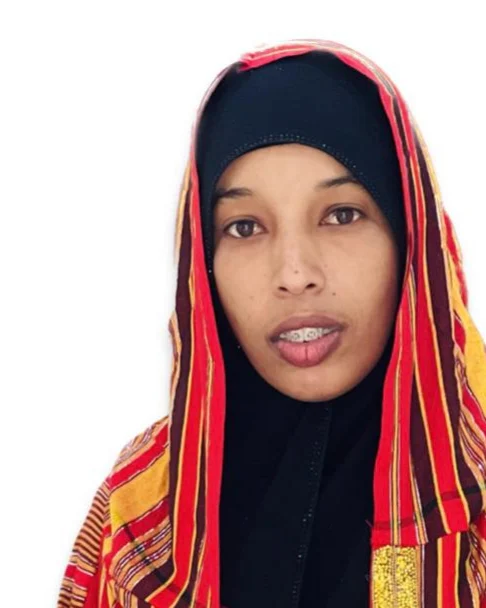
Hodo Aideed Asowe
Head, Departments of Nursing and Midwifery
Responsible for the Midwifery programme, its curriculum and its teaching.
View profileInstructors
 Dr. Fartun Abdullahi Hassan OreyInstructor in Paediatrics
 Jaweriya Bashir AhmedInstructor in Epidemiology
Careers and further study
- Midwife in a hospital maternity, labour and delivery unit
- Community or primary health care midwife in local health centres
- Maternal and child health officer with an NGO or health authority
- Family planning and reproductive health counsellor for women and families
- Midwifery educator or clinical preceptor for student midwives
- Postgraduate study in midwifery, reproductive health or public health
Fees
- Tuition
- US$ 400
- Charges
- US$ 70
- Total per semester
- US$ 470
The academic year has 42 weeks in two semesters of 18 weeks each. The first semester begins in August. Fees can be paid in full or in three instalments.
Every student also takes the University’s English Skills Program, which has its own fees, shown below.
Paying your feesEnglish Skills Program
All SIMAD University students take the English Skills Program (ESP) alongside the Midwifery programme. It is a University requirement, taught by the University’s Institute of Modern Languages, and its fees are paid separately from programme fees.
Five levels
English for Academic Purposes, taught with Macmillan Skillful, one level each trimester, about 15 months in all.
- 1. FoundationBasics of academic English
- 2. BeginnerFunctional English
- 3. IntermediateCore academic skills
- 4. AdvancedAcademic communication
- 5. MasteryFluent academic English
ESP fees
Paid to the University separately from programme fees.
- RegistrationUS$ 5, paid once
- TuitionUS$ 114 per semester
- BooksUS$ 60 per semester
Exemption. Students who were born and educated in an English-speaking country may be exempted once they provide proof.
Entry requirements
- Secondary leaving certificate from the Ministry of Education with at least 60%
- A pass in the University entrance examination
- Fair proficiency in English
- Payment of the University admission fee
Registration runs from August to September.