Overview
The Bachelor of Science in Medical Laboratory Sciences & Applied Microbiology prepares laboratory professionals for clinical, public health, research, industrial and environmental laboratories. Two foundation years cover laboratory science, phlebotomy, microbiology, haematology, parasitology and biochemistry; three advanced years add clinical biochemistry, immunohaematology, immunology, histopathology, virology, mycology, molecular genetics and genomics, laboratory quality assurance, and food, industrial and environmental microbiology. Teaching combines lectures, case discussions and supervised practicals in six Faculty laboratories. Students complete a thesis and two internship semesters in hospital laboratories. Graduates can perform reliable tests, support diagnosis and disease surveillance, and contribute to food safety and biotechnology.
Revised title of the Microbiology and Laboratory Science programme.
Programme structure
5 years (10 semesters), full time: two foundation years, then three years of advanced and professional training, including two internship semesters.
- Years 1–2Foundation laboratory sciences
- Years 3–5Advanced training, thesis and internships
What you will learn
By graduation, you will be able to:
Explain microbiology, haematology, clinical biochemistry and pathology in practice
Analyse and interpret laboratory data and diagnostic results using scientific reasoning
Perform laboratory procedures accurately and safely, with sound quality control
Apply laboratory services to public health, infection prevention and biosafety
Use laboratory information systems and report findings clearly to clinicians
Organise laboratory workflows and work effectively in multidisciplinary teams
Apply scientific inquiry to research and continuing professional development
Act ethically and legally, protecting patient confidentiality and data integrity
Clinical and practical training
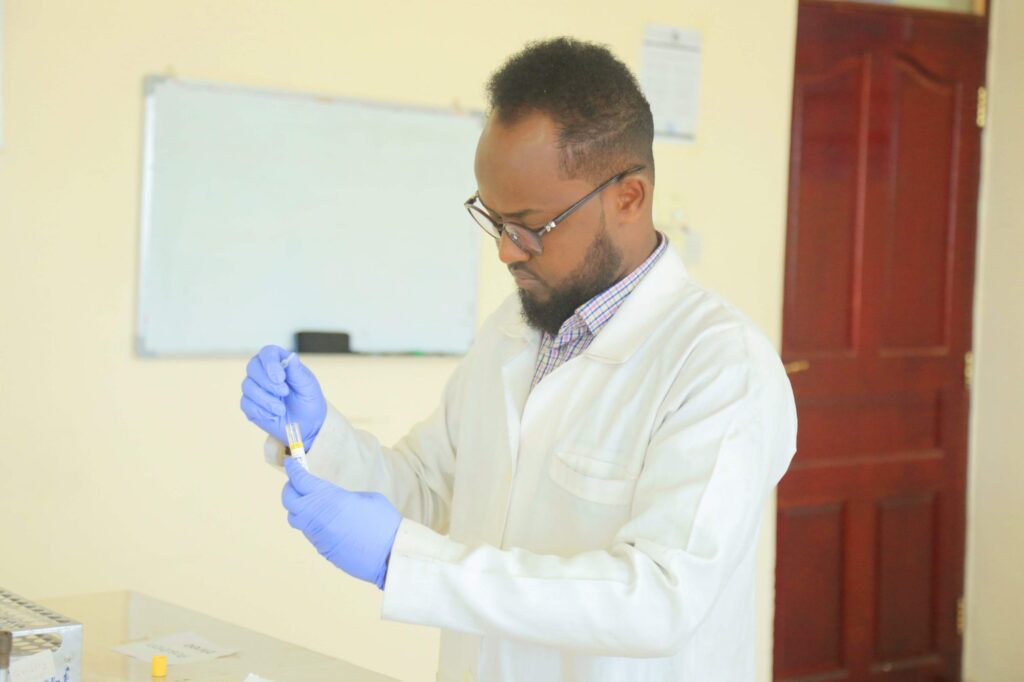
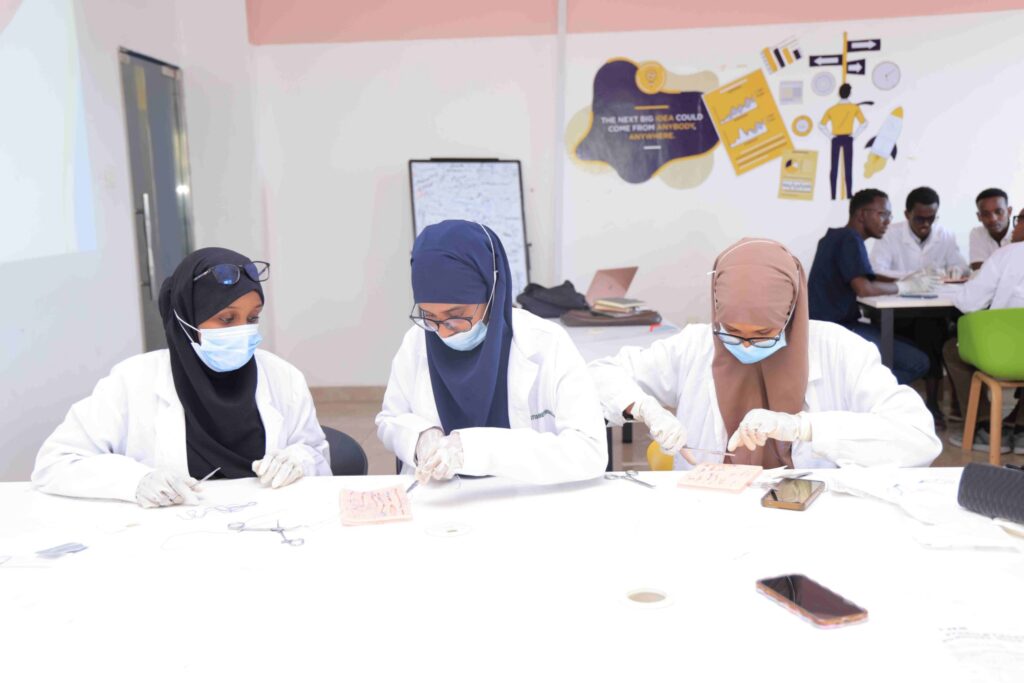
- Students train in the Faculty’s microbiology, clinical pathology, biochemistry, molecular biology, anatomy and physiology, and skills laboratories, practising phlebotomy and specimen handling in simulation first.
- In the final year, Internship Programmes I and II (32 hours a week) at Dr. Sumait Hospital cover specimen reception, testing, quality control and reporting, assessed through a competency portfolio.
Programme lead and instructors

Abdikani Omar Salah
Head, Department of Biomedical Sciences
Responsible for the Medical Laboratory Sciences & Applied Microbiology programme, its curriculum and its teaching.
View profileInstructors
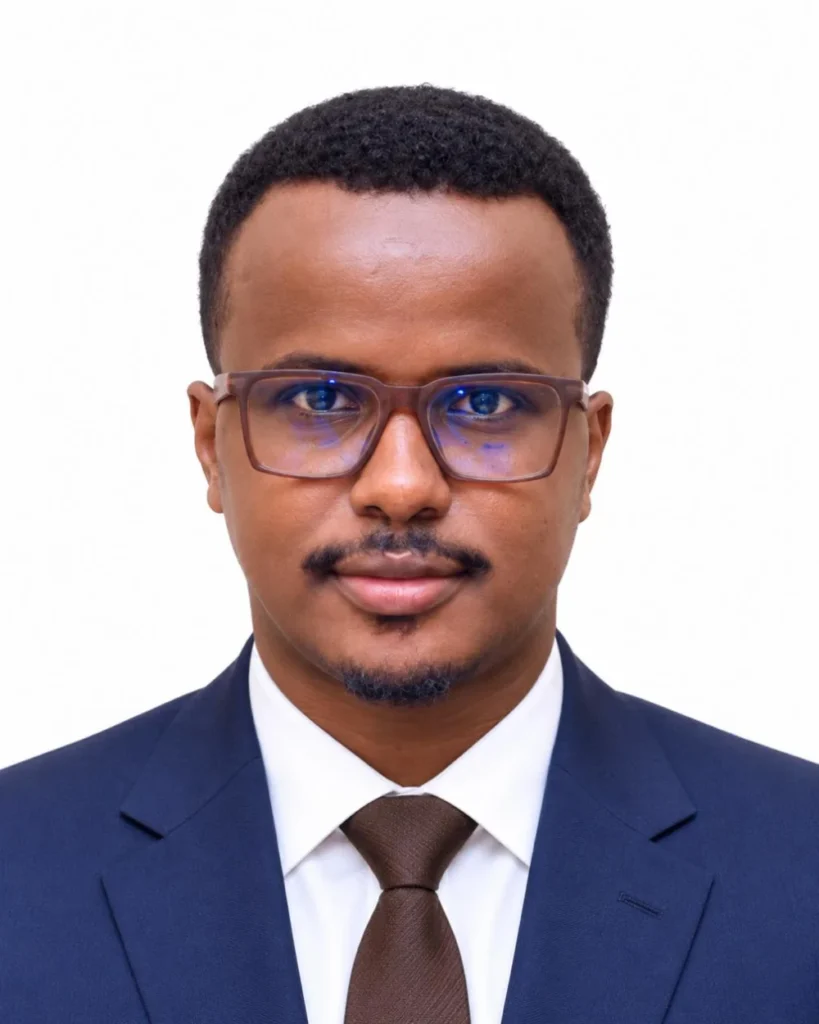 Abdirasak Sharif AliInstructor in Haematology
 Dr. Saleh Abdulkadir SaeedInstructor in Pathology
 Mohamed Adam MahamudInstructor in Parasitology
 Yahye Ahmed NageyeInstructor in Pharmacology
Careers and further study
- Medical laboratory scientist in a hospital or diagnostic laboratory
- Public health laboratory and disease surveillance officer
- Blood bank and transfusion laboratory scientist in a hospital
- Food, water and environmental microbiology analyst in a testing laboratory
- Research laboratory or biotechnology technician at a university or company
- Postgraduate study in microbiology, laboratory medicine or public health
Fees
- Tuition
- US$ 400
- Charges
- US$ 70
- Total per semester
- US$ 470
The academic year has 42 weeks in two semesters of 18 weeks each. The first semester begins in August. Fees can be paid in full or in three instalments.
Every student also takes the University’s English Skills Program, which has its own fees, shown below.
Paying your feesEnglish Skills Program
All SIMAD University students take the English Skills Program (ESP) alongside the Medical Laboratory Sciences & Applied Microbiology programme. It is a University requirement, taught by the University’s Institute of Modern Languages, and its fees are paid separately from programme fees.
Five levels
English for Academic Purposes, taught with Macmillan Skillful, one level each trimester, about 15 months in all.
- 1. FoundationBasics of academic English
- 2. BeginnerFunctional English
- 3. IntermediateCore academic skills
- 4. AdvancedAcademic communication
- 5. MasteryFluent academic English
ESP fees
Paid to the University separately from programme fees.
- RegistrationUS$ 5, paid once
- TuitionUS$ 114 per semester
- BooksUS$ 60 per semester
Exemption. Students who were born and educated in an English-speaking country may be exempted once they provide proof.
Entry requirements
- Secondary leaving certificate from the Ministry of Education with at least 60%
- A pass in the University entrance examination
- Fair proficiency in English
- Payment of the University admission fee
Registration runs from August to September.